“An image consists of Light and Shadow.”
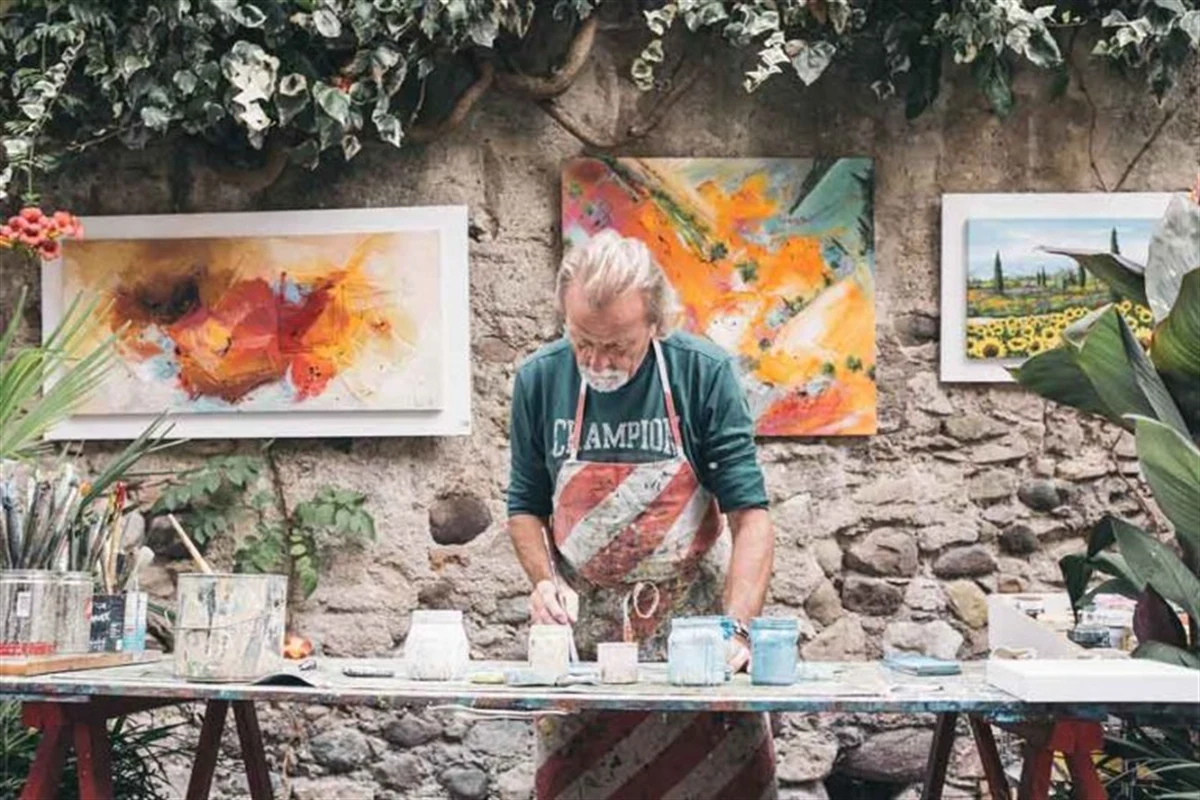
A painter only draws on an empty canvas, a writer writes on an empty page. In order to create the boundless beauty and art bestowed upon us by nature and the higher power, the artist must first transcend their own reality and self. Thus, he ceases to be merely an artist, and simply becomes the art itself.
He will no longer attempt to create something from his limited mind, he will become an instrument emerging from the infinite creation, transmitting this beauty to us. There is no longer ‘his being’ or ‘his art’; there is only the ‘art’ itself. It is th art created with infinite love.
People often admire the artist as a human being who creates art. However, both art and the artist are instruments of a higher power. The best artist is one who can completely annihilate himself in the face of this power. He purifies himself entirely and fill with the light of the Creator. He knows that he can only express outwardly as much as he is filled within.
A good artist knows very well that it is not himself who is doing it. He sees something beyond himself emerging and taking control. When he fully surrenders to it, that power comes and takes his whole heart, body, hands, eyes, and mind, using them as a good instrument to complete creation in all its splendor.
In the end, it becomes the existence of those who can internalize beauty, abundance, and love. When a person transcends their own self and looks within, they see that all of these have been placed within them.